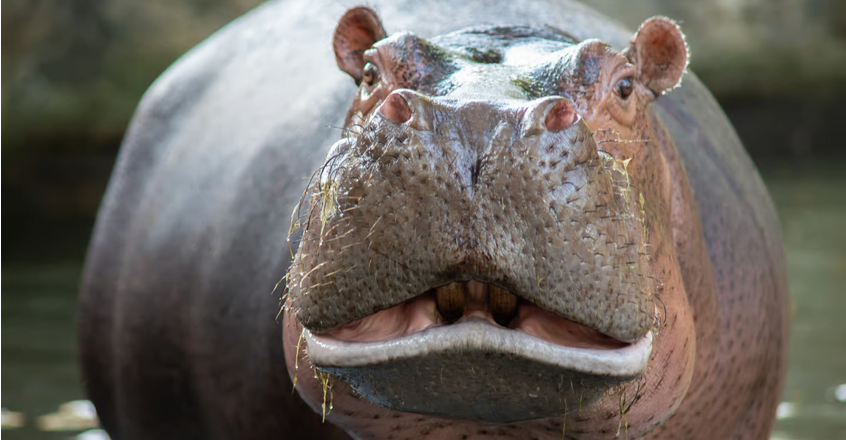
Colombia’s hippos—once a bizarre footnote of Pablo Escobar’s criminal empire—are now at the center of a high-stakes conservation debate. With the government pushing lethal population control, a surprising savior has emerged: the son of a billionaire, stepping in with a bold offer to shelter the animals rather than see them killed.
This isn’t just about saving a few oversized mammals. It’s a collision of environmental science, ethical responsibility, and private wealth reshaping public policy.
The Origin of Colombia’s Cocaine Hippos
Pablo Escobar didn’t just traffic cocaine—he built his own private zoo at Hacienda Nápoles, his sprawling estate in Antioquia. Among the exotic animals he imported were four hippos: one male, three females. He likely saw them as symbols of power and exotic luxury.
When Escobar died in 1993, most of the animals were relocated. But the hippos were too difficult to move. So they were left behind in the estate’s lakes and lagoons.
No one expected them to thrive. But hippos are resilient. And without natural predators, they bred rapidly.
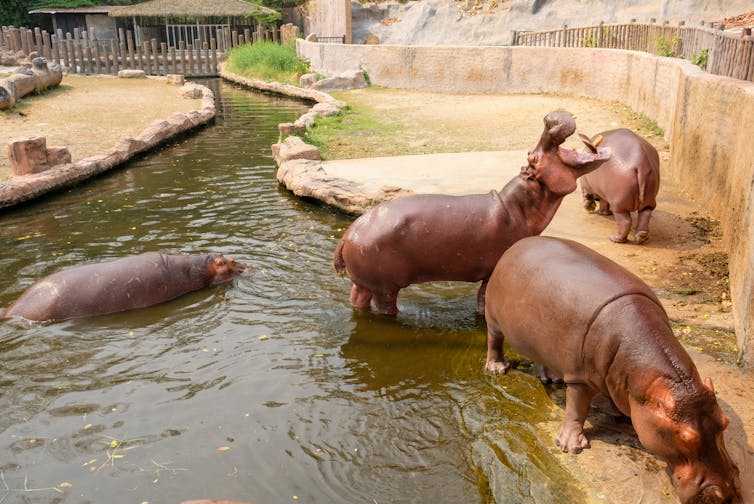
Today, that original group has exploded to over 160 animals, spreading across rivers and wetlands in northern Colombia. They’ve become the world’s only wild hippo population outside Africa—and a growing ecological threat.
Why the Government Wants to Cull the Hippos
Colombia’s environmental authorities have long viewed the hippos as invasive. Hippos are ecosystem engineers. In Africa, that’s natural. In Colombia? It’s destabilizing.
They alter water chemistry with their waste, which increases algae growth and depletes oxygen. Their grazing habits reshape riverbanks, and they outcompete native species like manatees and capybaras. Researchers have documented elevated nitrogen and phosphorus levels in waterways near hippo clusters—classic signs of ecological imbalance.
For years, the government’s strategy was contraception. But it’s proven difficult to implement at scale. Tracking and darting large, unpredictable animals in remote wetlands isn’t easy. The fertility control program has only managed to sterilize a fraction of the population.
With numbers doubling every nine years, Colombian officials have concluded that culling is the only viable long-term option.
That decision sparked outrage—not just from animal rights groups, but from an unexpected source.
The Billionaire’s Son Who Stepped In
Enter Austin Simon, son of real estate mogul Richard Simon. The younger Simon, known for his environmental philanthropy and ownership of vast land holdings in Central America, made headlines when he publicly offered to relocate and house up to 100 of Colombia’s hippos at a newly developed conservation reserve in Costa Rica.
“This isn’t about glorifying Escobar’s legacy,” Simon said in a statement. “It’s about recognizing that these animals are innocent. They didn’t ask to be brought here. And they don’t deserve to be slaughtered because we failed to act sooner.”
The proposed sanctuary—a 12,000-acre private reserve straddling the Costa Rican-Nicaraguan border—was originally intended for endangered Central American species. But Simon said its infrastructure, freshwater sources, and isolation make it ideal for hippo resettlement.
The offer includes veterinary care, tracking systems, and full funding for transport and long-term maintenance. No taxpayer money would be required.
Public Reaction: Celebration and Skepticism
Simon’s proposal has drawn polarized reactions.
On one side: animal lovers, conservationists, and social media users celebrating what they call a “compassionate alternative.” Petitions supporting the relocation have gained hundreds of thousands of signatures. Viral posts depict the hippos as victims of human folly, not threats to be eliminated.
On the other: biologists and policy experts warning of unintended consequences.
“The problem isn’t solved by moving them,” says Dr. Elena Ríos, a tropical ecologist at the Universidad de los Andes. “You’re just exporting the invasion. If even one hippo escapes or reproduces in Central America, we could face the same crisis in a new region.”
Costa Rica’s environmental ministry has not yet approved the plan. Officials cite strict biosecurity laws and concerns about introducing a non-native megafauna into sensitive ecosystems.
“Even with the best intentions,” a ministry spokesperson said, “we can’t risk turning Costa Rica into the next Colombia.”
The Logistical Nightmare of Moving Hippos
Relocating hippos isn’t as simple as loading them onto a truck.
These animals weigh up to 3,000 kilograms. They’re aggressive, unpredictable, and highly sensitive to stress. Transporting one safely requires sedation, reinforced crates, helicopters or barges for remote extraction, and a dedicated veterinary team.
In 2023, South Africa relocated 15 hippos as part of a conservation push. The operation took six months and cost over $1.2 million. Each animal required custom transport and weeks of quarantine.
Simon’s team claims they’ve secured partnerships with wildlife logistics firms experienced in megafauna translocation. They’re proposing a phased transfer—starting with young, less aggressive individuals—over a three-year window.
Still, critics point out that Colombia’s hippos aren’t used to capture. Many live in dense, hard-to-access areas. The risk of injury or death during capture is high.
One veterinarian familiar with the plan noted: “Sedating a hippo in a muddy riverbank is never routine. Even with perfect conditions, complications happen.”
Why Sterilization Failed to Keep Up
Before culling or relocation became urgent, Colombia bet on contraception.
The method? A porcine zona pellucida (PZP) vaccine, delivered via dart. It prevents fertilization and has been used successfully on elephants and deer in controlled environments.
But hippos are different.
For one, they’re aquatic. Darting them requires boats, precision, and calm conditions—none of which are guaranteed in Colombia’s rainy season. For another, PZP isn’t permanent. Females need booster shots every year or two.
Tracking individual animals across a 1,000-square-kilometer zone is a logistical nightmare. And with limited government resources, the sterilization rate has hovered around 20%—nowhere near enough to curb population growth.
“We were too optimistic,” admitted a former official at Colombia’s National Parks. “We thought we could sterilize our way out of the problem. But the hippos outpaced us.”
Now, with the population approaching 200, the window for non-lethal solutions is closing.
The Ethical Dilemma: Guilt, Responsibility, and Legacy
At the heart of this crisis is a moral question: Who is responsible?
The hippos are alive because of Pablo Escobar. But he’s been dead for 30 years. The Colombian government waited decades before acting. Now, the animals face death—not for what they’ve done, but for where they exist.
Austin Simon frames his intervention as ethical reparations. “We created this problem,” he said in an interview. “We have a duty to fix it humanely.”
But others argue that sentimentality shouldn’t override ecological science.
“You can’t let charisma dictate conservation,” says Dr. Luis Fernández, a wildlife biologist. “Jaguars are charismatic. So are pandas. But we manage their populations based on data, not emotion. The hippos should be no different.”
Yet public sympathy clearly leans toward saving them. The hippos have names now—“Pepe,” “Chiquita,” “Gordito.” They’ve become cultural icons, appearing in documentaries, children’s books, and tourism campaigns.
Killing them risks a public relations disaster—especially as Colombia works to rebrand itself beyond its narcotrafficking past.
Can the Sanctuary Plan Work?
Simon’s proposal hinges on three factors: government approval, ecological containment, and long-term monitoring.
The sanctuary site is ringed by natural barriers—mountains and rivers—and would be surrounded by double fencing designed to contain large animals. Each hippo would be microchipped and tracked via satellite.
Genetic testing would ensure no breeding between relocated animals. A sterilization protocol would remain in place even in captivity.
Still, no system is foolproof.
In 2016, two hippos escaped from a reserve in Argentina. One was shot after charging a farmer. The other was recaptured after a week-long chase.
Costa Rican officials are wary. While they appreciate the intent, they stress that their country’s biodiversity is fragile. Introducing a non-native species—even in a controlled environment—sets a dangerous precedent.
“We can’t become the world’s dumping ground for problematic animals,” said one policy advisor on condition of anonymity.
A Model for Future Interventions?
If Simon’s plan succeeds, it could redefine how the world handles invasive species with public appeal.
Current approaches are often binary: eradicate or ignore. But as climate change and human activity continue to disrupt ecosystems, more species will fall into this gray zone—too dangerous to keep, too beloved to kill.
A third path—relocation to specially designed sanctuaries—might offer a compromise.
But it’s only viable when funded privately, managed scientifically, and regulated strictly.
“This could be a blueprint,” says conservation strategist Mira Chen. “But it can’t be replicated everywhere. It takes immense resources, land, and political will.”
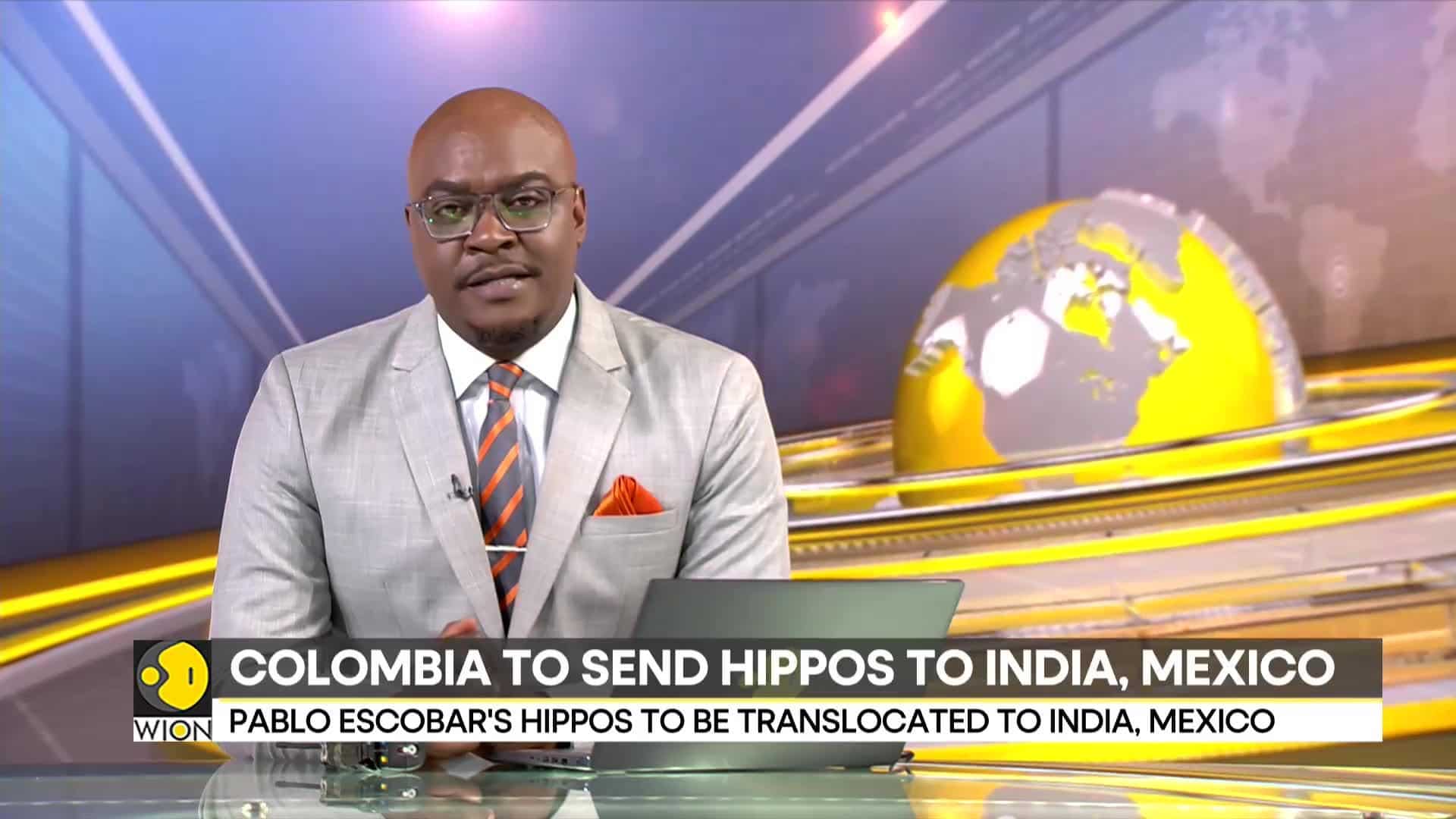
For now, Colombia’s hippos remain in limbo. The government has paused culling plans to evaluate Simon’s offer. A joint task force of Colombian, Costa Rican, and independent scientists is reviewing the proposal.
Decision-makers face pressure from all sides: scientists demanding ecological purity, citizens demanding mercy, and a billionaire’s son offering a solution that’s equal parts visionary and risky.
What Happens Next?
The fate of Colombia’s cocaine hippos hangs in balance.
If the sanctuary plan is approved, relocation could begin within 18 months. If rejected, lethal control measures are expected to resume by early next year.
One thing is clear: the world is watching.
These animals, born from one man’s criminal empire, have become symbols of a deeper crisis—the unintended consequences of human arrogance, and the difficult choices that follow.
Austin Simon may not be a traditional conservation hero. But his intervention has forced a global conversation about responsibility, innovation, and what it means to coexist with the mistakes of the past.
For the hippos, survival may depend not on biology, but on whether compassion can outmaneuver bureaucracy.
Frequently Asked Questions
Why are Pablo Escobar’s hippos called 'cocaine hippos'? They’re nicknamed “cocaine hippos” because they were brought to Colombia by drug lord Pablo Escobar using profits from his cocaine empire. The term reflects their origin, not their behavior.
How did the hippos survive and multiply in Colombia? With no natural predators, abundant food, and a favorable climate, the original four hippos bred rapidly. Their population now exceeds 160 and continues to grow.
Can hippos thrive outside Africa? While hippos are native to Africa, they’ve adapted surprisingly well in Colombia. However, their presence disrupts local ecosystems and poses risks to humans and wildlife.
What are the risks of relocating them to Costa Rica? The main risks include escape into the wild, unintended breeding, disease transmission, and ecological disruption if containment fails.
Why not sterilize all the hippos instead? Sterilization is difficult to scale. Darting requires access to each animal, repeat treatments, and resources Colombia lacks. Only a small fraction have been sterilized so far.
Is the billionaire’s son funding the entire relocation? Yes, Austin Simon has committed to covering all costs—including capture, transport, veterinary care, and long-term maintenance at the sanctuary.
Could this sanctuary model work for other invasive species? Possibly, but only under strict conditions: private funding, secure containment, scientific oversight, and minimal ecological risk. It’s not a one-size-fits-all solution.
FAQ
What should you look for in Billionaire’s Son Steps In to Save Colombia’s Cocaine Hippos? Focus on relevance, practical value, and how well the solution matches real user intent.
Is Billionaire’s Son Steps In to Save Colombia’s Cocaine Hippos suitable for beginners? That depends on the workflow, but a clear step-by-step approach usually makes it easier to start.
How do you compare options around Billionaire’s Son Steps In to Save Colombia’s Cocaine Hippos? Compare features, trust signals, limitations, pricing, and ease of implementation.
What mistakes should you avoid? Avoid generic choices, weak validation, and decisions based only on marketing claims.
What is the next best step? Shortlist the most relevant options, validate them quickly, and refine from real-world results.